I no longer need to look at the calendar to know that the ARC is getting closer. A walk around the harbours in the south of Gran Canaria is usually enough.
A few weeks beforehand, the atmosphere begins to change. In Arguineguín, Pasito Blanco and Puerto de Mogán, and at anchor just off the coast, those yachts start appearing again – boats that look as though they are preparing for something rather bigger than a fortnight’s holiday in the Canaries.
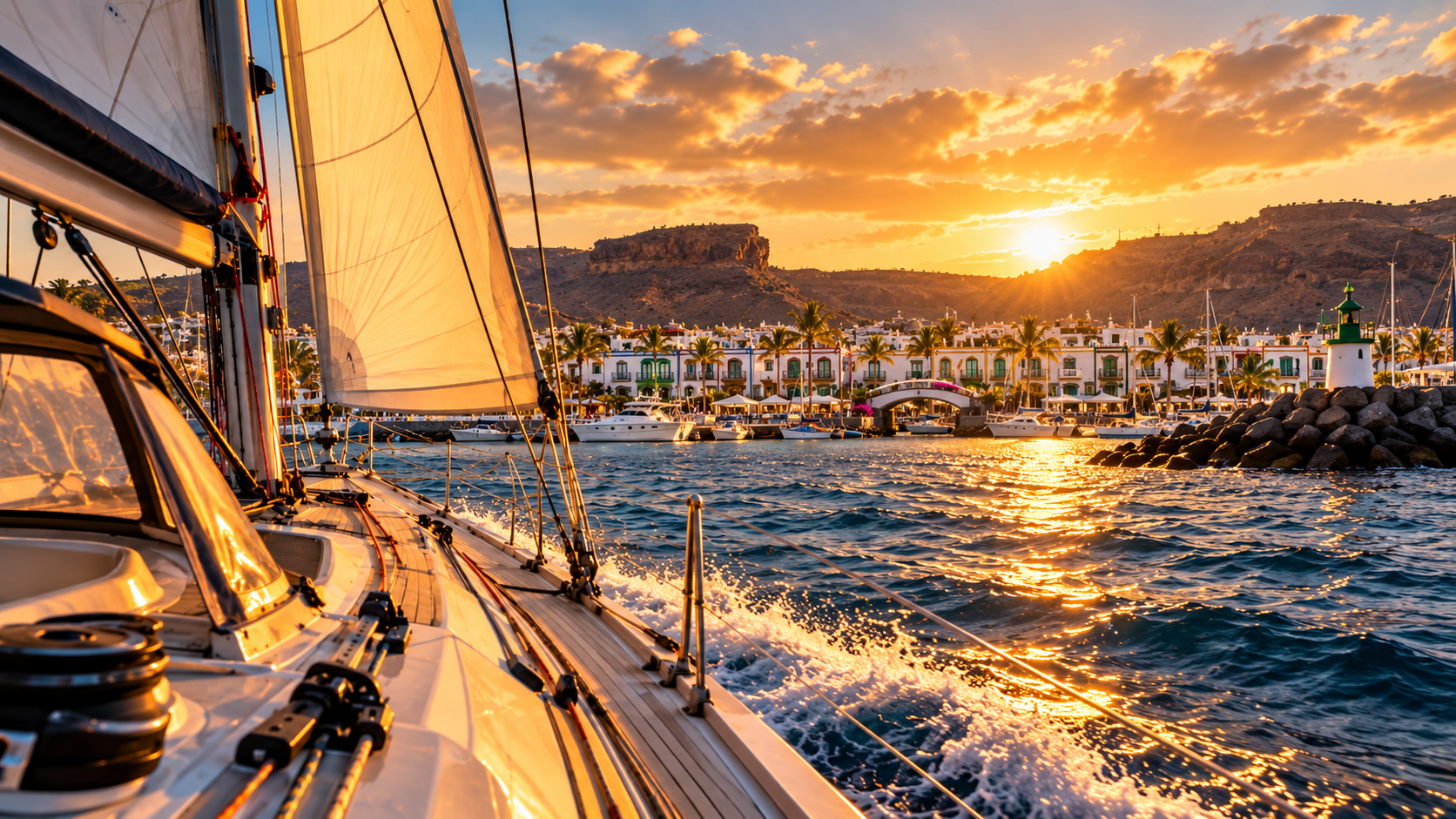
The boats are laden for an ocean crossing. Extra gear appears on deck, bags and provisions have to be squeezed into whatever space remains, and on the pontoons things are carried aboard, stowed and rearranged yet again. Some crews are couples, some are families with children, while others are sailing with friends or as part of a larger crew. When you see boats like these year after year, you begin to recognise the signs.
And then I know: soon they will be crossing the Atlantic again.
The Atlantic crossing does not begin in Las Palmas
At least not for the people on board.
Many of them have already come a long way by the time they reach Gran Canaria. They arrive from the Mediterranean, the Balearic Islands, France, Italy or from even farther afield. Some have already spent weeks at sea before the Canary Islands finally appear on the horizon.
And those with enough time do not necessarily arrive after that journey, head straight for Las Palmas and set sail for Saint Lucia a few days later.
They take a break.
For me, that pause has become part of the ARC, even though it appears in no official programme. A yacht may stay in the south for two, three or four weeks first. Sometimes longer. The family goes to the beach, evenings are spent over dinner, small jobs are done on board, provisions are topped up and perhaps there is still a spare part to wait for.
After a long passage, for a while the journey becomes a holiday again.
Arguineguín, Pasito Blanco and Puerto de Mogán are good places to take that break. Sunshine, settled weather, a swim in the sea, dinner out and a few days without having to organise too much. With several thousand nautical miles of Atlantic still ahead, there is no need to turn every stage beforehand into a race against the clock.
The Atlantic will come soon enough.
And then it is time to head for Las Palmas
At some point, the berths in the south begin to empty again.
The yachts head north to Las Palmas. There, little by little, the pause comes to an end and the Atlantic crossing begins to feel real. The boats lie closer together, crews are constantly on the move, and everything is checked, stowed and prepared one last time. ARC flags begin to appear and the atmosphere changes.
For a few weeks each year, Gran Canaria becomes one of the meeting points of the ocean-sailing world.
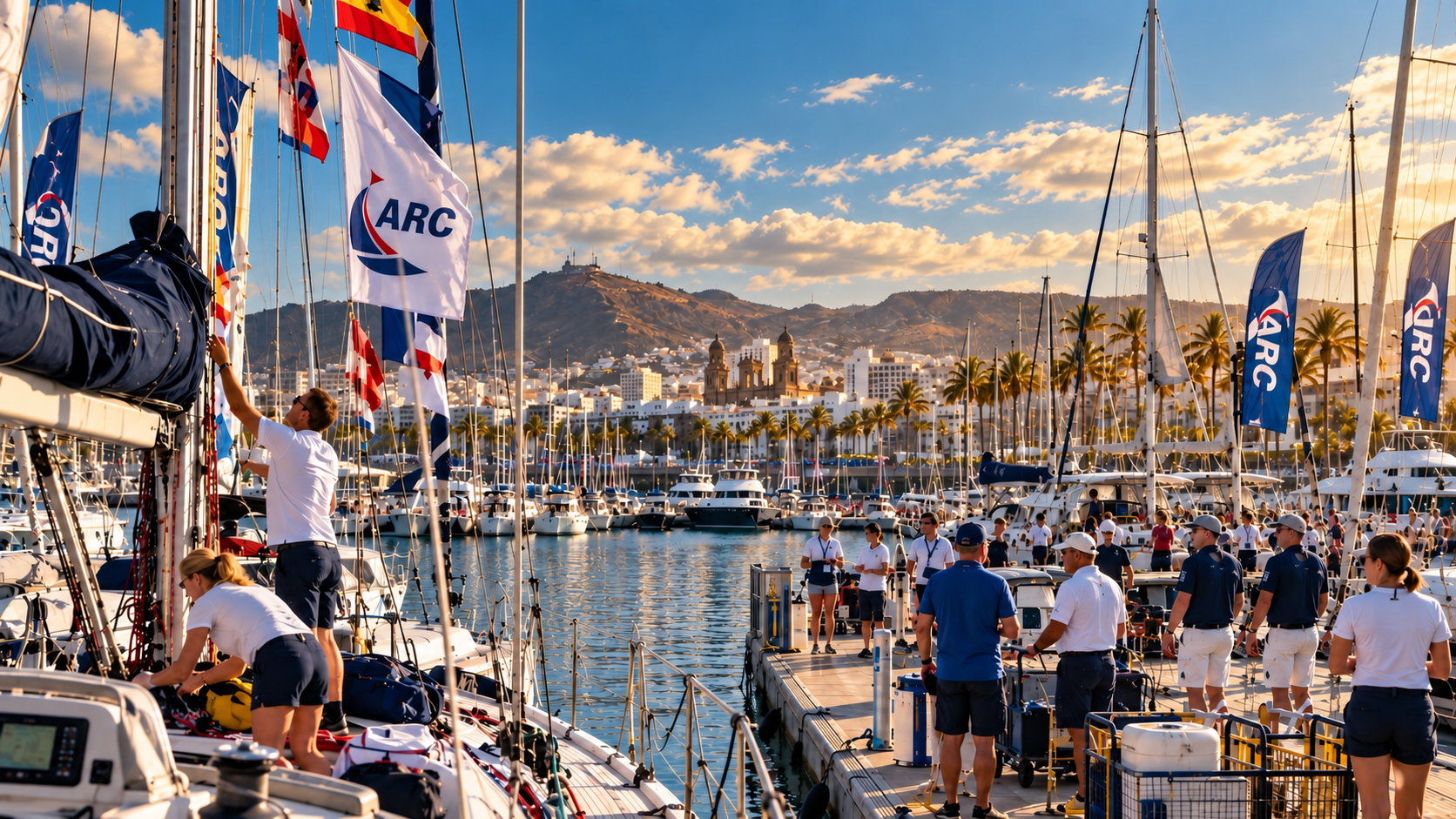
On 22 November 2026, the ARC will set sail from Las Palmas for Saint Lucia.
For me, though, the story does not begin on that day. It starts weeks earlier in the south of the island, when the first yachts laden for the Atlantic begin to appear. That is what makes the ARC such a visible part of Gran Canaria for me every year.
I watch the boats arrive, I see them stay for a while – and then, one day, they are gone.
I look at these boats a little differently
That has something to do with my work.
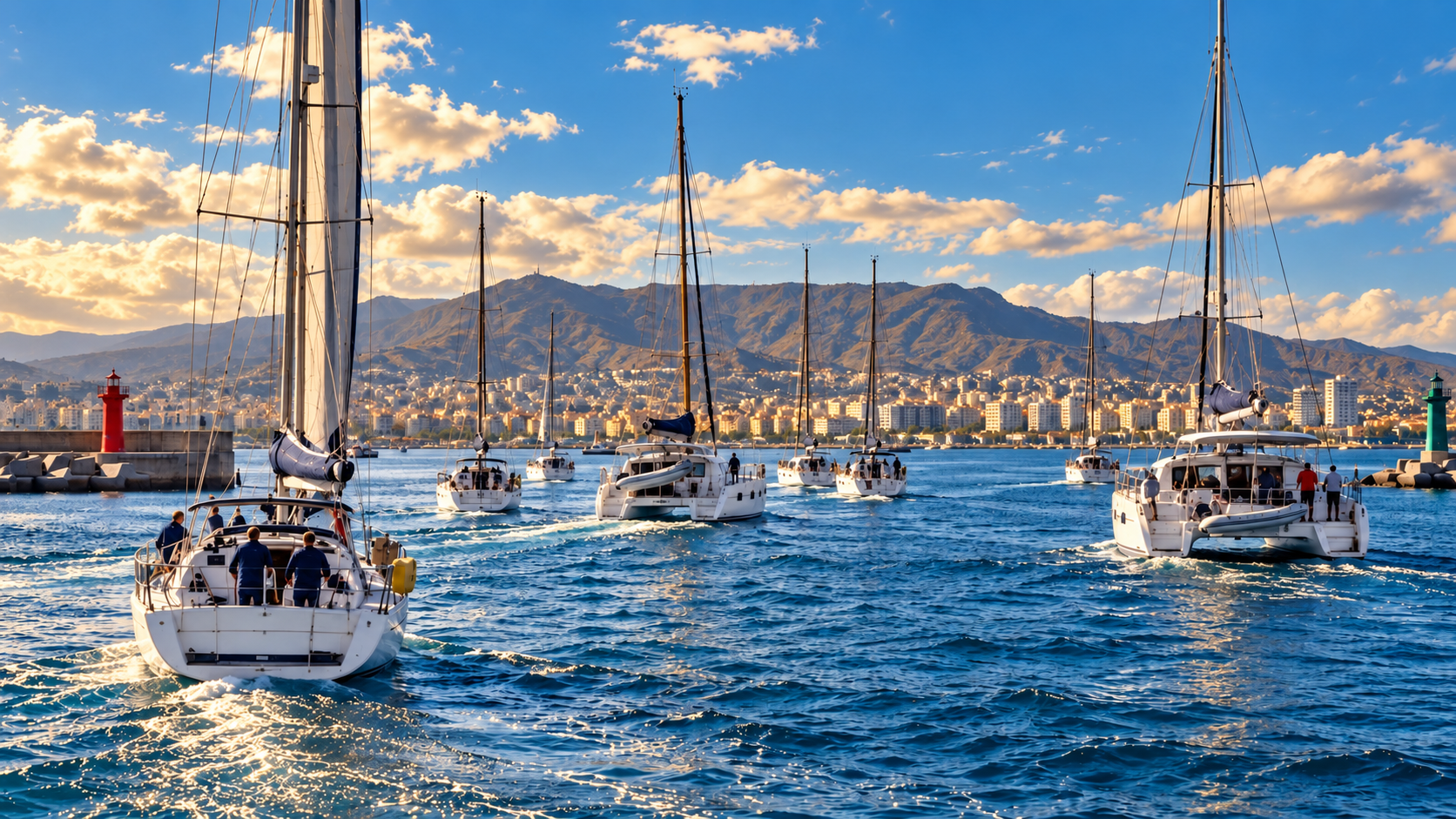
In Germany, I run Radio Offshore ®, where my work centres on SRC, LRC, marine radio and the GMDSS. So when I see one of these yachts, my eyes almost automatically wander upwards towards the antennas and communications equipment.
A VHF antenna is easy enough to recognise. What interests me more is the equipment that starts to matter once a yacht leaves the coast behind. What options does the crew have beyond VHF range? What is on board for an emergency? And how do they communicate when Gran Canaria has long since disappeared below the horizon?
These are questions I normally deal with in my courses. Here, however, the boats are right in front of me, with families, couples and crews on board who, just a few weeks later, will actually be somewhere out in the Atlantic.
Perhaps that is why I sometimes watch them for a little longer than most people do.
That way of looking at the ARC led to a more detailed article at Radio Offshore ®: ARC 2026 & GMDSS – safety and communications on the Atlantic .
And next autumn, I will probably see another one of those yachts laden for an ocean crossing somewhere in Arguineguín, Pasito Blanco or Puerto de Mogán and know immediately:
The ARC is back.