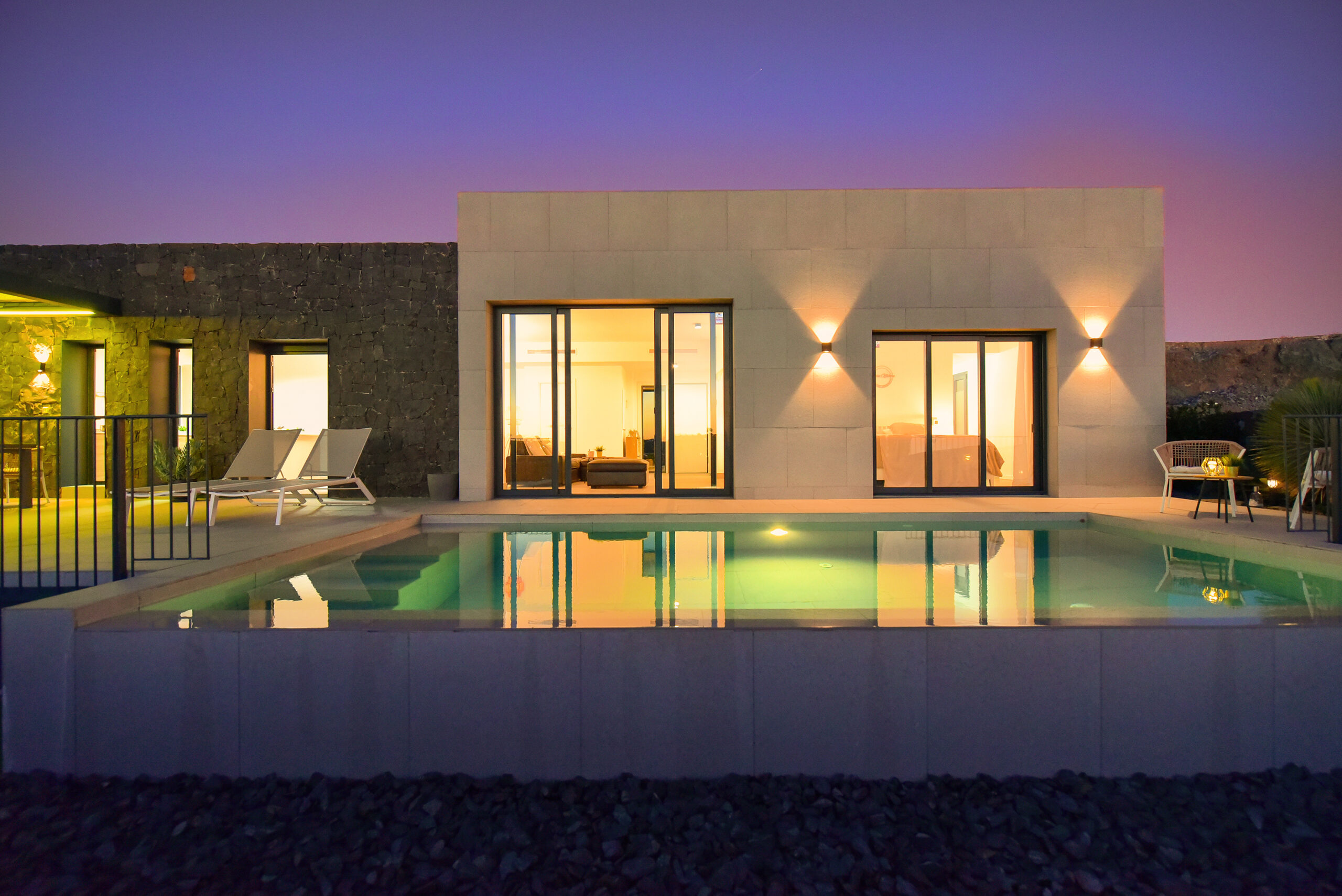
It sounds like a simple question. In reality, it is one of the more difficult questions to answer about Salobre Golf Resort. Much depends on when you are here, where your villa is located and what you personally consider quiet.
You could pick an early morning when, at around 6.30 a.m., the first greenkeeper is already somewhere out on the golf course with a mower. If your villa is directly beside the course, you may hear him in the distance. You could focus on the delivery truck bringing food to the hotel in the morning. Or on a construction site where work begins at around 8 a.m. on weekdays and continues into the afternoon.
All of that exists.
Yet judging Salobre by those isolated moments would distort the character of the place. There is no through traffic, no shopping street, no promenade and no nightlife district. Most vehicles belong to guests, owners, employees or service companies. Especially in the evening and at night, you notice how little from the outside world reaches this valley.
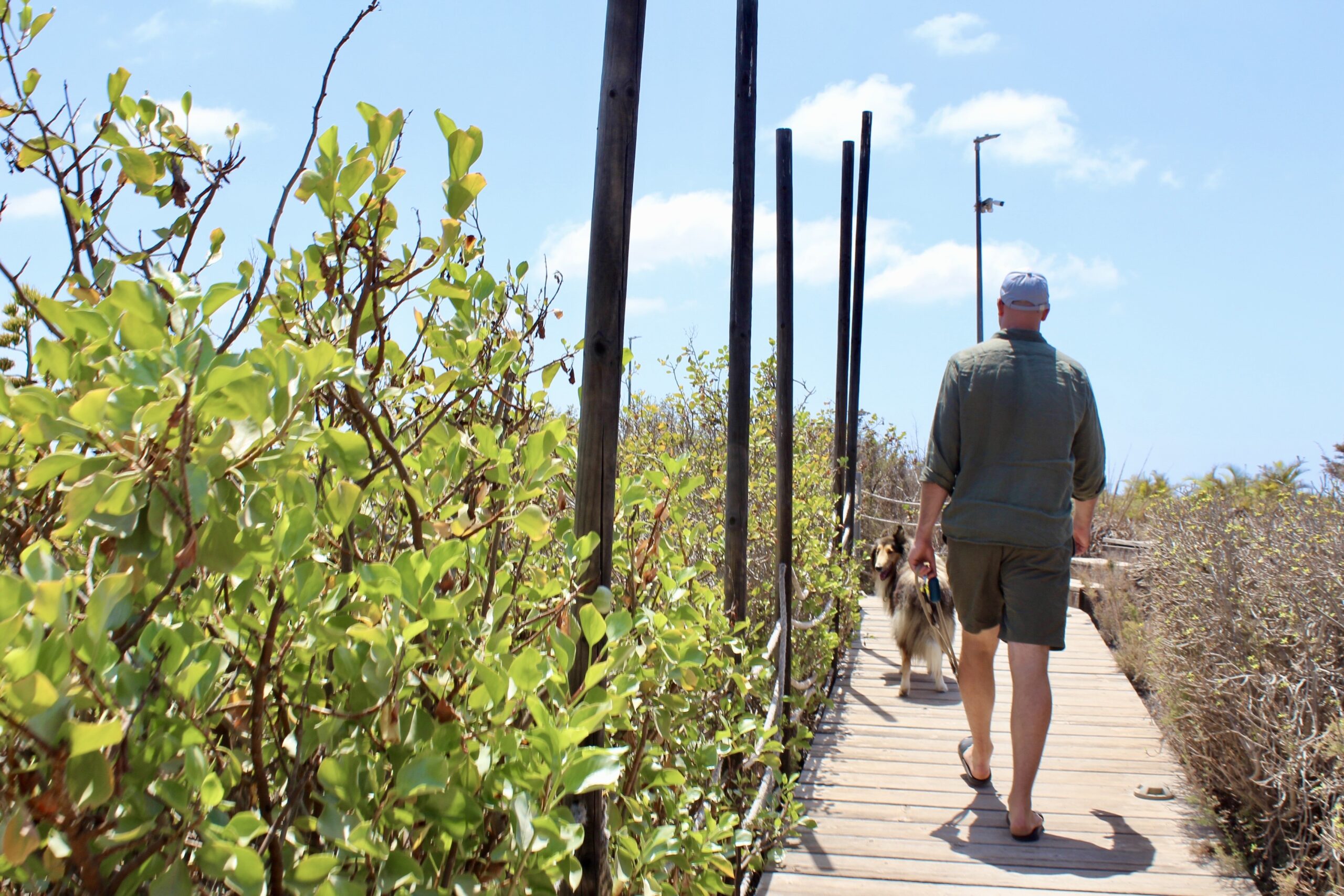
A more interesting question is how Salobre changes over the course of a year. The weather, occupancy and type of guest all change with the seasons – and so does the atmosphere throughout the resort.
December to mid-February – the classic winter season
For many visitors from Central and Northern Europe, December, January and the first half of February are among the most attractive months. In my experience, they are also among the most settled periods of the year in terms of weather.
The air is often clear, there is plenty of sunshine and the temperatures are particularly pleasant for golf. Of course, there is no weather guarantee on Gran Canaria either. But over the years, a certain pattern becomes apparent – one that regular visitors tend to recognise.
Salobre is well occupied during the winter. The golf courses are busy, many villas are rented and the hotel is in its main season.
What is striking is how little of that activity is noticeable away from the central areas. Occasionally the wind carries a relaxed “Fore!” across from the golf course. Apart from that, the villa resort can be almost fully occupied without feeling particularly busy in many parts of the valley.
From mid-February – the first transition period
From around mid-February, the weather tends to become less predictable. There can still be excellent weeks, but changing conditions with cloud, wind or the occasional cooler day become more common.
Activity within the resort also gradually decreases. In April in particular, there are times when even the five-star hotel can feel surprisingly quiet. Not deserted – simply much less busy than during the winter season.
These months are also a natural time for work around the resort. And that leads to one aspect that should not be left out of an honest answer to the question of how peaceful Salobre really is.
Construction work – part of the picture
Salobre Golf Resort is around 30 years old and was developed from the beginning to a high standard and according to a clear master plan.
There are no apartment blocks or multi-family residential buildings anywhere in the valley. The most compact form of development is the semi-detached villa. Otherwise, detached villas, generous plots and the golf courses define the landscape. This concept has been maintained from the beginning.
Development is not completely finished, however. New villas are still being built on individual plots.
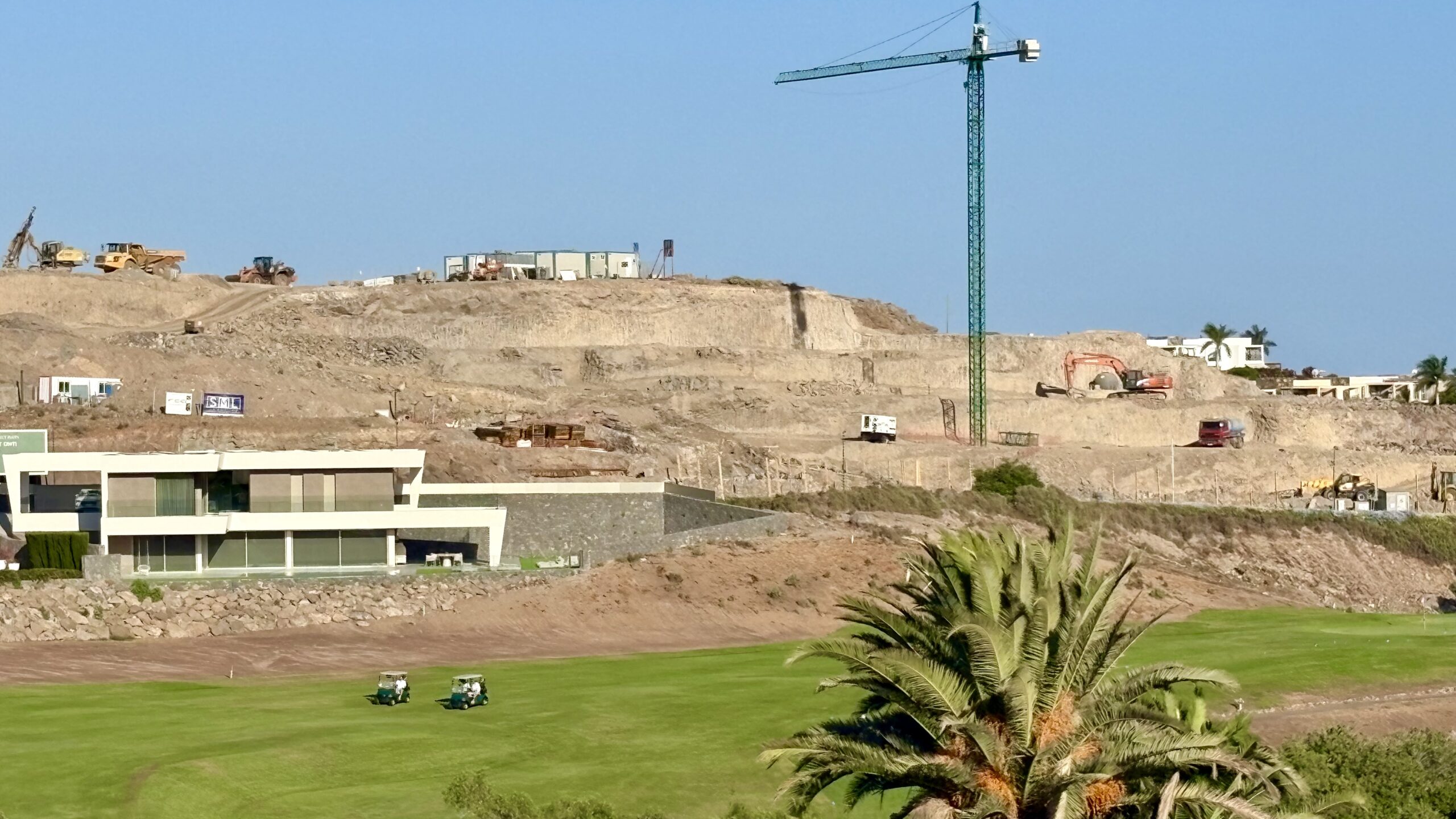
A construction site can look enormous in a photograph. The image with the crane and heavy machinery makes that particularly clear. At the same time, golf continues as normal immediately in front of it.
It also shows how localised this kind of work can be. If you are staying directly beside an active construction site, you will notice it on weekdays. A few streets away, the same project may hardly matter at all.
Work normally takes place during the day, sometimes until around 4 p.m. So when choosing a villa, the pool, the view and the distance to the golf course are not the only things worth considering. The immediate surroundings matter as well.
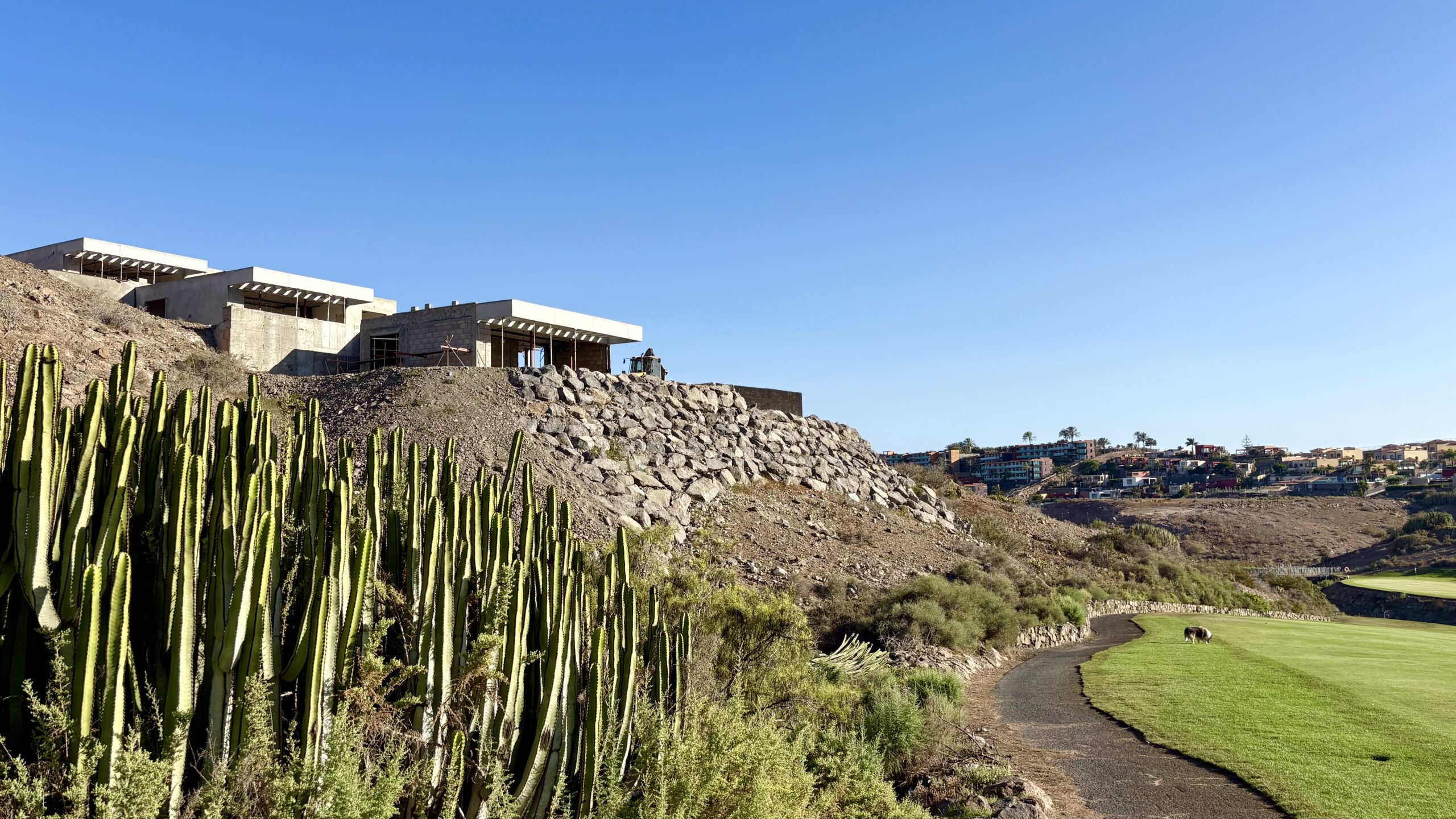
The second image shows a different perspective. Individual new villas are being built between established vegetation and a golf course that has long been part of the landscape. Salobre is not being rebuilt on a large scale; development is continuing selectively in individual parts of the resort.
July to late September – the Spanish summer
The first week of July often marks the beginning of the second particularly settled weather period of the year. It usually continues well into September.
At the same time, the guests change.
Spanish owners and holidaymakers now arrive from the mainland, from the north of Gran Canaria and from the other Canary Islands. Many villas that are rented to visitors from Central and Northern Europe during the winter are occupied by their Spanish owners in summer.
This creates a second high season. Finding a good villa in July or August can be just as difficult as during the most popular winter months – only the guests are different.
The reason is fairly simple. In winter, Europeans come to Gran Canaria for sunshine and mild temperatures. In high summer, many Spaniards appreciate the island's comparatively moderate climate, while temperatures on the mainland and around the Mediterranean can be considerably higher.
Salobre does not become emptier in summer – it becomes more Spanish.
And that changes the atmosphere. Families and friends spend longer evenings on their terraces, children play, and weekends are often about eating together and enjoying time with friends.
Younger groups also come for three or four days at a time. Larger villas with five or six bedrooms offer plenty of space for a group of friends. On a summer weekend, things can therefore become quite lively – and occasionally quite audible.
It does not change the character of the resort; it is simply part of summer. It remains controlled, however. If a group becomes too exuberant later in the evening, the security service ensures that the resort rules are respected.
Salobre is more sociable in summer and occasionally louder. That still does not make it a party destination.
October and November – the next transition
After summer, the picture changes again. The Spanish holiday season comes to an end, occupancy decreases and the weather becomes more variable.
From around mid-October, the first European winter visitors gradually begin to return. November remains a transition period for both the weather and the resort before conditions often become more settled again towards the end of November and the beginning of December.
Then the period of clear air and pleasant temperatures begins again – the conditions that bring many golfers back to Gran Canaria year after year.
The annual cycle starts again.
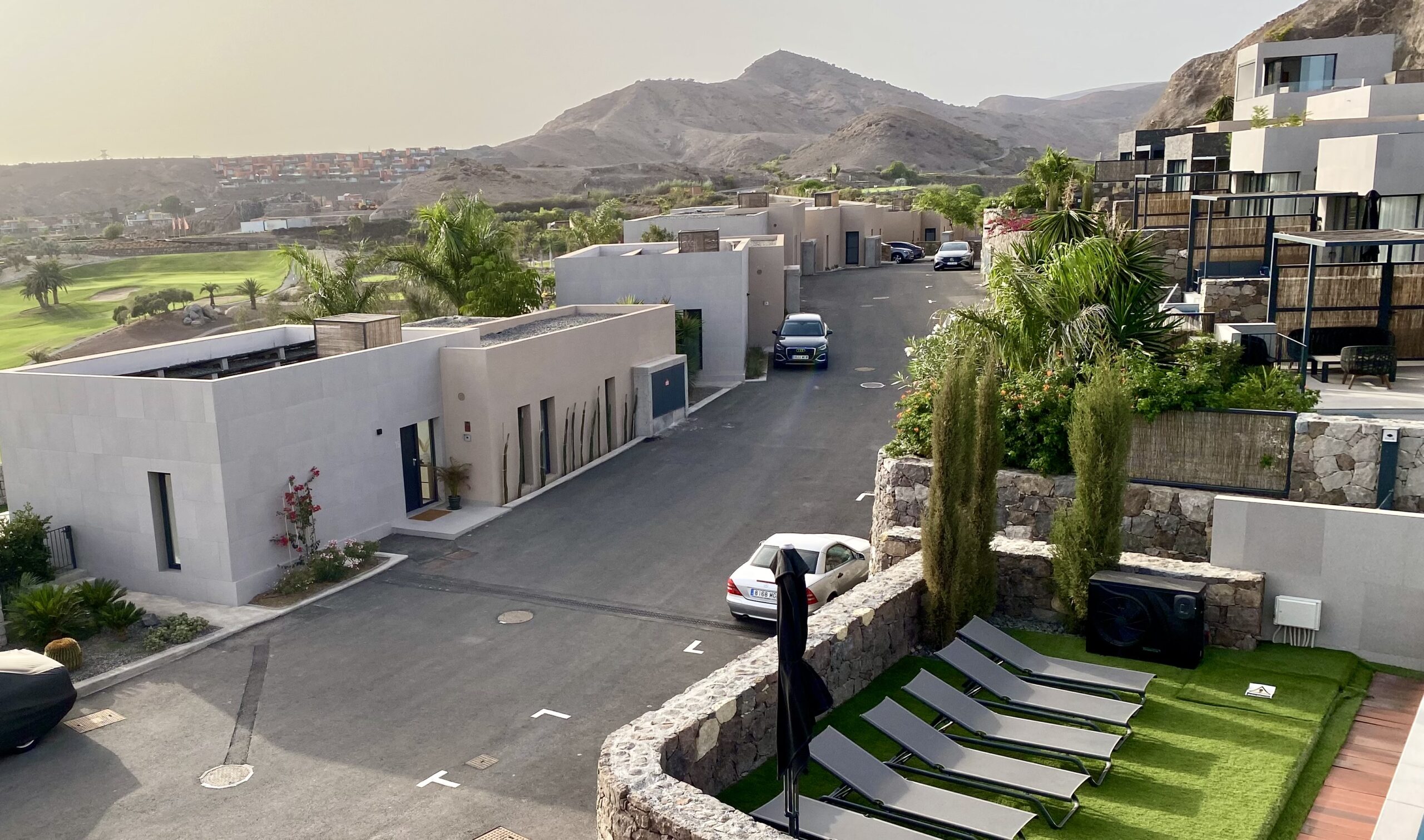
Absolute silence does not exist in Salobre either. What matters is that individual sounds rarely develop into a permanent background noise.
Perhaps there is a better way to describe Salobre:
It is not a silent place. It is a secluded place.
And that is precisely what makes it distinctive: even when the villa resort is well occupied, it does not necessarily feel that way.